Now Reading: Is Organic Coffee Worth It or Just Marketing Hype?
-
01
Is Organic Coffee Worth It or Just Marketing Hype?

Organic coffee is gaining popularity in US and soon Globally as people lean towards natural foods and sustainable lifestyles. For many, the organic label on consumable products gives the impression of being high quality and healthy. Yet, organic coffee is not quite as straightforward as most people would assume.
So, what is organic coffee, and what’s all the fuss about? In this article, we’re going to answer some of these common questions, as well as what to look for and what brands to try first.
What Does Organic Coffee Really Mean?
When a coffee brand carries the organic label, it means that the coffee beans were grown under specific agricultural standards that avoid the use of synthetic pesticides, herbicides, and chemical fertilizers. These standards are set by certification bodies and require careful adherence to organic farming practices.
Criteria for the USDA Organic Label
Firstly, let’s take a look at the criteria necessary for earning the USDA organic label.
When it comes to farming, the USDA prohibits the use of synthetic pesticides, fertilizers, and GMOs. Because of this, farmers are required to use shade growing, crop rotation, and other similar techniques to manage pests and weeds.
When it comes to processing, USDA certified organic coffee must be processed free of additives, which normally speed up wet processing. Dry processing, however, is normally considered the more sustainable and natural method.
In regards to roasting, the roaster must avoid the use of artificial chemicals to qualify as organic.
How Farmer Grows Organic Coffee & It’s Advantages?
So, what are the advantages of organic coffee? Believe it or not, organic coffee is a bit of a polarizing topic among coffee lovers. Let’s take a look at the actual benefits of organic coffee.
Part of the organic coffee farming process is growing coffee in the shade. Shade growing promotes biodiversity and a sustainable ecosystem of trees, bugs, birds, and other important organisms.
Organic farming can contribute to the production of high quality beans as well. The use of organic fertilizers improves the quality of the soil and reduces the risk of chemical residue in the air, water, soil, and the beans themselves.
You might find this article helpful: Why Do Baristas Spray Water on Coffee Beans Before Grinding?
Organic farming also creates a better working environment for farmers who do not have to deal with harsh chemicals.
One other interesting benefit is that organic practices can boost the natural nutrients in the product. This can lead to better health, improved mood, reduced stress, and an improved immune system.
Disadvantages of Organic Coffee
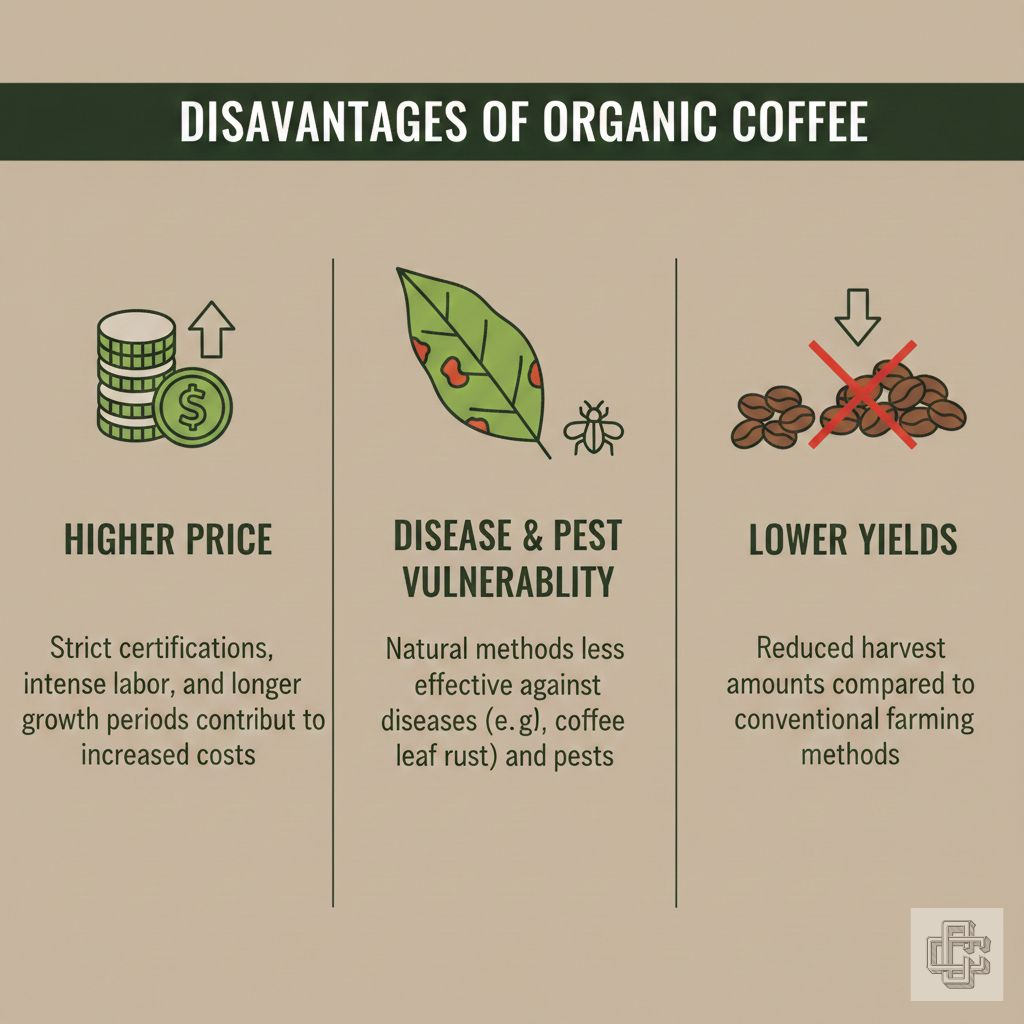
Now, let’s take a look at some of the disadvantages of organic coffee.
One of the biggest disadvantages of organic coffee is simply the price. This is partly because of the strict certifications, intense labor, and the time needed to grow coffee in an organic manner.
Natural methods are not always effective at combating some coffee diseases, such as coffee leaf rust, and certain pests. Organic coffee also gives lower yields than conventional methods.
What Should You Look for When Buying Organic Coffee?
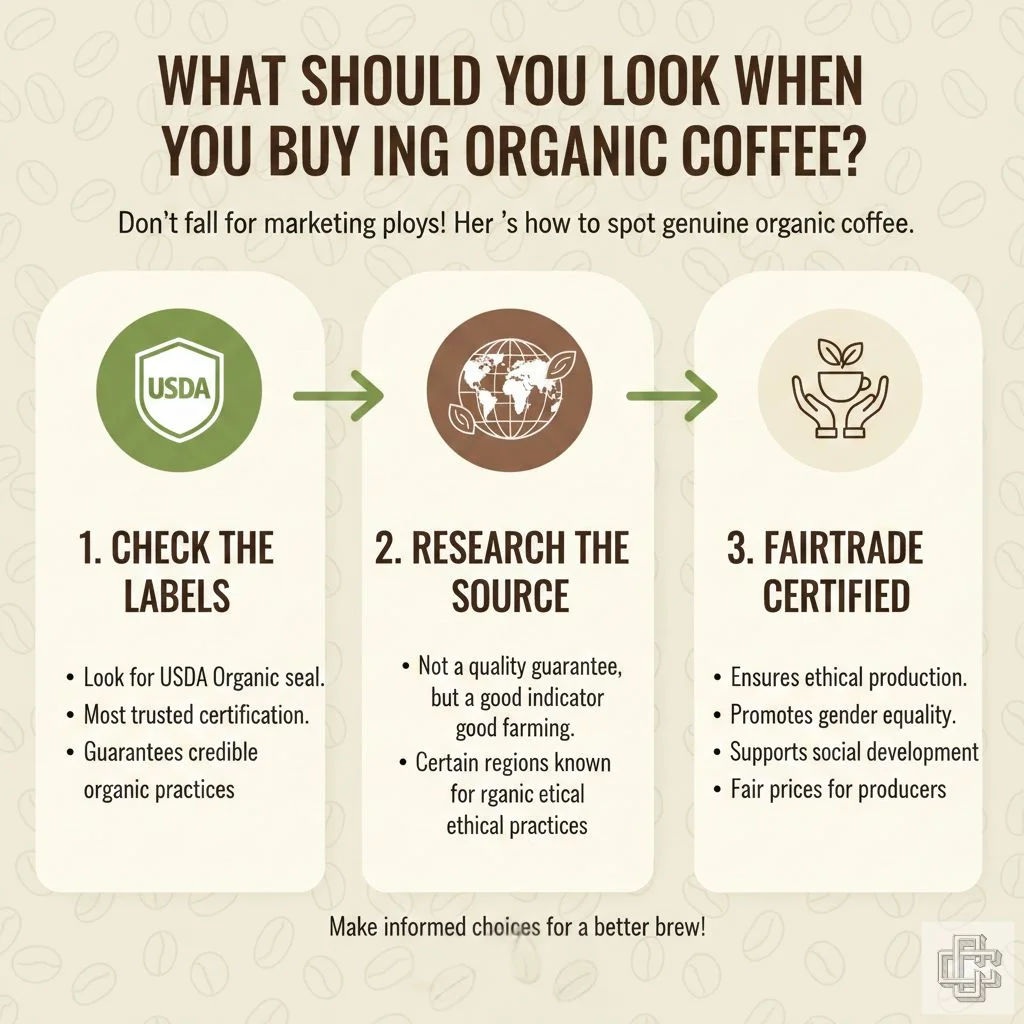
Some companies use the term organic as a marketing ploy, luring you into spending extra cash on a substandard product. To avoid falling into this trap, here are a few tips and tricks you can use the next time you shop.
- Firstly, check the labels. While there are several organic certifications, the most trusted is the USDA organic label.
- Secondly, check the source of the coffee beans. While the source does not guarantee a particular quality, it can serve as a telltale sign.
- Thirdly, keep an eye out for Fairtrade certified coffee. This label guarantees that the production of the coffee incorporates gender equality, supports social development, and sets a reasonable price for producers.
Why You Should Go With Organic Coffee instead Instant Coffee?
A study showed that instant coffee has the highest levels of acrylamide. Acrylamide can potentially damage the human nervous system, and it is also a carcinogen. So, if you have the choice, don’t buy instant coffee. Get organic coffee if you can.
I don’t care what somebody says, that glyphosate is not of concern. I don’t think we fully know what drinking glyphosate is going to do to our bodies. Glyphosate is a broad spectrum herbicide that was invented by a Monsanto scientist, and it’s sprayed on a lot of coffee crops.
Frequently Asked Questions
Q1. Whether coffee needs to have the USDA organic label to be considered organic?
Ans. Not necessarily. Some products are grown in the most organic way possible but are not USDA certified.
Q2. Whether organic coffee guarantees the flavor profile of a cup?
Ans. The taste of coffee is highly dependent on a variety of factors, including storage, the roasting process, harvesting techniques, selection of coffee beans, and growing conditions.
While organic farming practices influence the quality of a cup, they do not guarantee the best taste.
Where to Buy Organic Coffee?
When it comes to buying organic coffee, you can now find it in most places. This includes supermarkets, organic stores, fair trade shops, online and even your near by roastery. I still remember, when we used to operate Commonwealth Coffee Roastery, customer started asking for our coffee beans and that’s how we started selling.
Remember, always do your research.
Final Verdict
Thus, being more for organic coffee actually means better quality coffee? Getting that organic certified label isn’t cheap, costing up to thousands of dollars. But does spending all that cash actually mean that you’re getting better quality coffee? For small farmers, these hefty fees can be an exclusion from the market, where big players dominate. It’s a system needing serious overhaul.
Having a certification doesn’t necessarily guarantee better quality coffee; it merely certifies that synthetic pesticides are not being used. High quality coffee beans are grown with care by knowledgeable farmers in their natural environment. Many of these farmers deploy naturally sustainable practices without having the certification.
When looking for labels, consider buying direct trade coffee from your local specialty coffee roaster. They should be able to tell you where the coffee comes from and if it’s organic, even if it’s not officially certified.